
LED Bulb Labels: What to Look for Before You Buy
Shopping for light bulbs used to be straightforward. You picked a wattage, screwed in the bulb, and hoped the room looked right. LEDs changed that routine for the better, but they also added lots of new information to every package. Those extra details can feel intimidating if you are accustomed to choosing bulbs by wattage alone. In reality, the label is your best friend because it tells you exactly how a bulb will perform long before you bring it home. By learning to read LED bulb labels, you can avoid wasted money, reduce returns, and create lighting that truly suits each space. Below, you will find the most important label elements explained in clear language. Each topic includes practical tips and real-world examples so you feel confident the next time you stand in the lighting aisle.
Look at Lumens First, Not Watts
For decades, people assumed that higher wattage meant a brighter bulb. That idea made sense when nearly every household bulb was an incandescent. With LEDs, watts measure electricity use, not brightness. Brightness is measured in lumens. A 10-watt LED can often outshine a 60-watt incandescent because it converts electricity into light far more efficiently. When you pick up a box, find the lumen number on the front panel before you look at anything else.
If you are replacing a 60-watt incandescent, an LED that produces around 800 lumens will deliver comparable brightness. A 100-watt incandescent produces roughly 1 600 lumens, so choose an LED with that lumen rating if you want the same light level. Reading lumens instead of watts helps you achieve consistent lighting from room to room, even when fixtures or lamp styles differ. It also prevents the common mistake of installing an LED that looks dim simply because its wattage is low.
Use the Lighting Facts Label as Your Cheat Sheet
Most reputable brands include a Lighting Facts label that looks a bit like a nutrition panel on food packaging. It condenses five important performance metrics into one easy-to-scan box. Brightness is listed first in lumens, confirming how much light the bulb will provide. Right next to brightness, you will see an estimated yearly energy cost based on three hours of daily use and your local average electricity rate. This figure helps you compare energy savings across different bulbs quickly.
Life expectancy appears in hours or years and tells you how long the bulb should last under normal use. For example, a typical LED might promise 15 000 hours. If you run that bulb for three hours a day, it should last more than thirteen years. Light appearance, shown in Kelvins, indicates whether the bulb casts a warm, neutral, or cool tone. Finally, the label lists energy used in actual watts. That number is primarily useful when you need to calculate total load on a circuit, but it also highlights how little power an LED consumes compared with the incandescent it replaces.
Spend a minute with the Lighting Facts panel before you buy, and you will avoid unpleasant surprises when you flip the switch at home.
Choose the Best Color Temperature for Each Space
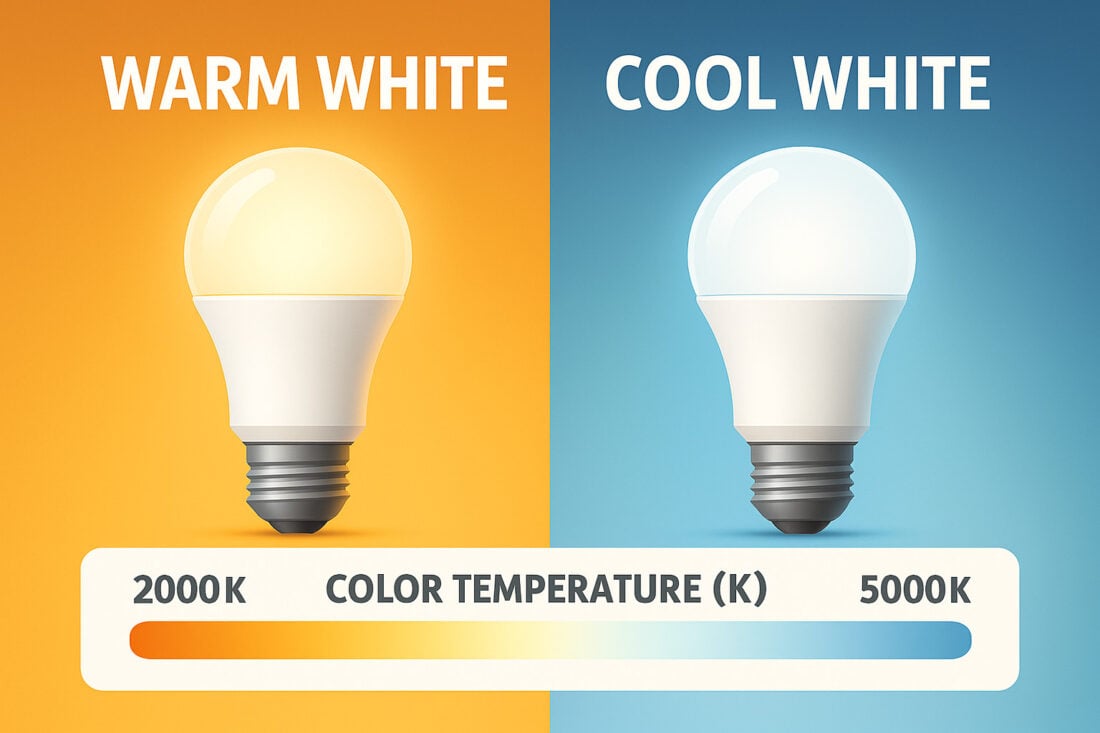
Color temperature affects mood more than any other lighting attribute. A bulb rated between 2 700 K and 3 000 K glows softly and creates a sense of warmth that is perfect for bedrooms and living rooms. Move up to 3 500 K or 4 100 K and the light turns neutral, which works well for kitchens, closets, and bathrooms where clarity matters but you still want a comfortable feel. At the high end, 5 000 K and above produces a crisp daylight effect that boosts visibility in garages, workshops, or craft rooms.
When you mix color temperatures in one space, the eye has trouble adjusting, and the room may look mismatched. Keep bulbs within the same Kelvin range for a cohesive look. LED bulb labels always display the Kelvin value, so match that number across fixtures when you want uniform lighting.
Pay Attention to CRI for Accurate Color
CRI, the Color Rendering Index, measures how faithfully a light source shows colors compared with natural daylight. A CRI of 80 is adequate for most household tasks, but if you cook from scratch, apply makeup, or work with fabrics and paint, you will notice the benefit of a higher score. Bulbs labeled CRI 90 or higher bring out subtle tones in skin, food, and artwork. Reds appear richer, greens look more vibrant, and whites stay true. Not every package lists CRI prominently, so search for it on the side or back panel. If it is missing, assume the score is below 80 and look for another brand that shares the number proudly.
Confirm Dimming Capability and Switch Compatibility
Many homeowners like the flexibility of dimming, especially in dining rooms, bedrooms, and media spaces. An LED package must say “dimmable” if the bulb can reduce its brightness smoothly. Even then, you need to pair the bulb with an LED-rated dimmer switch. Older rotary dimmers that were designed for incandescent loads often cause LEDs to flicker or fail to dim below fifty percent. Some packages list compatible dimmer brands or model numbers. Matching bulb and switch specifications on the front end will save time and frustration later.
Verify Fixture Ratings to Prevent Early Failure
Before installing an LED, read the fine print regarding fixture type. If your fixture is enclosed with little airflow, choose bulbs labeled for enclosed fixtures; otherwise, heat may shorten the bulb’s life. For outdoor applications, select bulbs marked “damp location” if they sit under an eave, or “wet rated” if they will be exposed to direct rain and snow. Using the correct rating ensures maximum lifespan and keeps your warranty valid.
Make Every Purchase a Confident One
Learning to read LED bulb labels transforms a guessing game into a confident decision. Focus on lumens to set brightness, study the Lighting Facts panel for energy and life data, match color temperature for mood, check CRI for vibrant color, confirm dimming compatibility, and respect fixture ratings. When you use the entire label rather than a single number, you save money, enjoy better light, and reduce the chance of early failures.
Whatwatt carries LED products with clear, easy-to-read packaging and expert support. If you have questions about label details or need help selecting the right bulb for a specific fixture, we are ready to assist.
Call us today at1-877-942-8928 or email [email protected] for personal guidance. You can also browse our Bulb Guide on the website to compare shapes, bases, and color options before you shop in store or online.