
LED Bug Lights: Keep Porch Areas Pest-Free
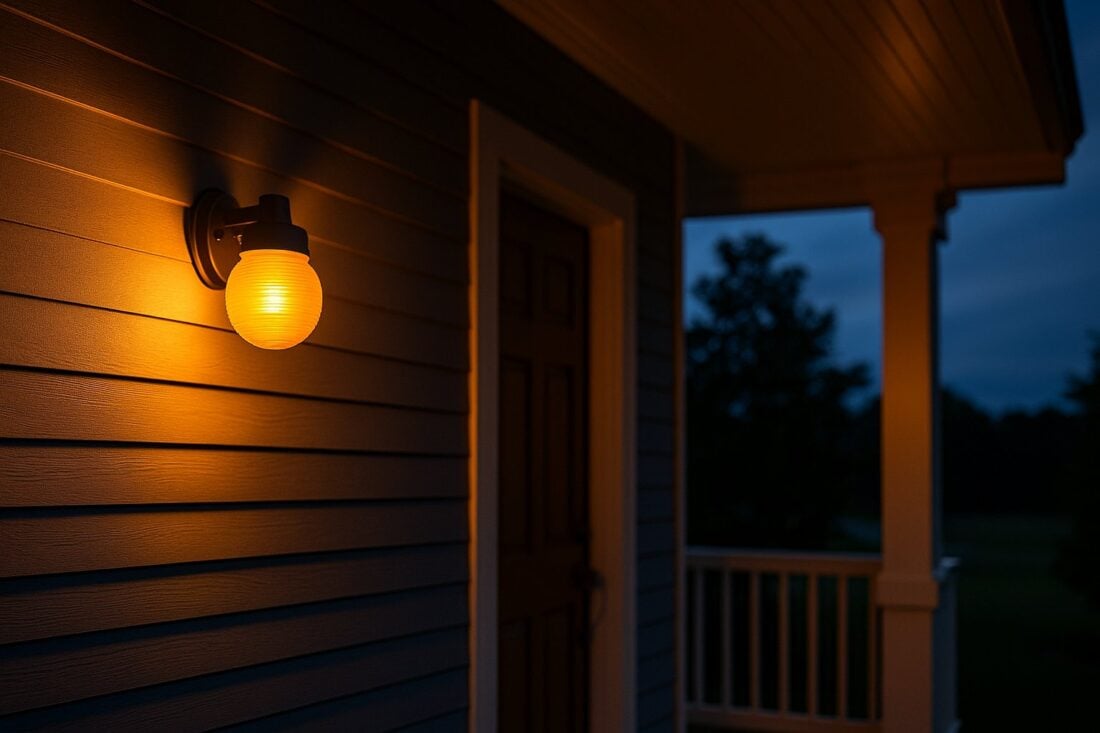
Nothing ruins a summer night faster than a swarm of moths circling your porch light or mosquitos drifting toward the glow. Traditional incandescent bulbs emit a broad spectrum that includes ultraviolet and blue wavelengths that many flying insects use for navigation. The more UV and blue light you provide, the more bugs you invite. LED bug lights solve the problem by shifting the visible output into a warmer yellow band that insects have trouble detecting. The result is a well-lit entryway that keeps pests elsewhere while also saving energy.
This guide explains how these specialty LEDs work, what ratings to look for, and where to place them for the biggest reduction in unwelcome visitors. You will also see how their long life and low wattage quickly pay back the small premium over a standard bulb.
Why Insects Love Ordinary Bulbs and Ignore LED Bug Lights
Most nocturnal insects rely on ultraviolet or short blue wavelengths to orient themselves. Incandescent and halogen lamps generate a full rainbow of light plus a hefty dose of heat. Fluorescents add even more UV output. A warm-white LED produces very little UV, but its blue spike can still draw bugs. By filtering that blue spike or selecting a diode that emits primarily at 560 nanometers, manufacturers create LED bug lights that give you usable illumination without serving as a beacon for every moth in the neighborhood.
If you compare a yellow-tinted LED bug lamp to a regular soft-white LED of equal lumens, the bug lamp will appear slightly dimmer to the human eye, yet it remains bright enough for safe footing. The small trade-off in perceived brightness is more than balanced by the dramatic drop in insect activity around doors and patio seating.
Key Specs to Check Before You Buy
A quality LED bug light lists three things on the box. First, look for a color temperature around 2 000 to 3 000 Kelvin with extra filtering to cut near-UV output. Some brands label these as “amber,” “golden,” or “yellow spectrum.” Second, check that the bulb is outdoor rated for damp or wet locations if it will sit in an exposed fixture. Third, verify the lumen count. A porch sconce often needs only 300 to 500 lumens to light a small landing, while a driveway floodlight might call for 800 lumens or more. Matching lumens to the task avoids overlighting, which can still attract bugs even in yellow wavelengths.
Energy use will be minimal. A 300-lumen bug light usually draws less than five watts, roughly an eighty-five percent savings over a forty-watt incandescent “bug bulb” of the past.
Placement Tips for a Truly Pest-Free Zone
Start by swapping the main entry or patio fixture with an LED bug light. Position any remaining white bulbs farther from your seating area to pull stray insects away from doors and windows. If you need bright task lighting near a grill or workbench, install a motion sensor so that white light turns on only when necessary. In landscape fixtures, use low-wattage amber path lights to outline walkways without broadcasting a UV invitation. Finally, keep fixtures clean. Dead bugs can collect on lens covers and reflect stray wavelengths that undo some of the bug-repelling benefits.
Long-Term Savings and Comfort
Because LED bug lights run cool, lenses stay clearer and plastic housings last longer. Most lamps promise twenty-five thousand hours of life, which equates to more than eleven years at six hours per night. The reduced heat also lowers the risk of warped fixtures or scorched insects that create odors. Many homeowners notice a secondary benefit: fewer spider webs on porch ceilings because spiders build webs where food is plentiful. With fewer flying insects, webs relocate to the far edge of the yard.
Switching one sixty-watt incandescent porch bulb for a six-watt LED bug bulb saves about fifty-four watts per hour. Over a year of nightly use that equals roughly one hundred kilowatt hours, or ten to fifteen dollars on a typical electric rate. Across multiple fixtures, the savings multiply.
Need Help Choosing the Right Bulb?
Whatwatt carries amber and yellow spectrum LED bug lights in standard E26, candelabra E12, and PAR flood formats. If you are unsure which wattage or color temperature will best protect your patio, reach out. We will match bulb style, lumens, and fixture rating so you enjoy evenings outdoors without constant swatting. Call us today at1-877-942-8928 . You can also explore our Bulb Guide for side-by-side comparisons of porch and pathway lamps that deter insects.